Valley of Flowers vs Hemkund Sahib: Two Unique Experiences
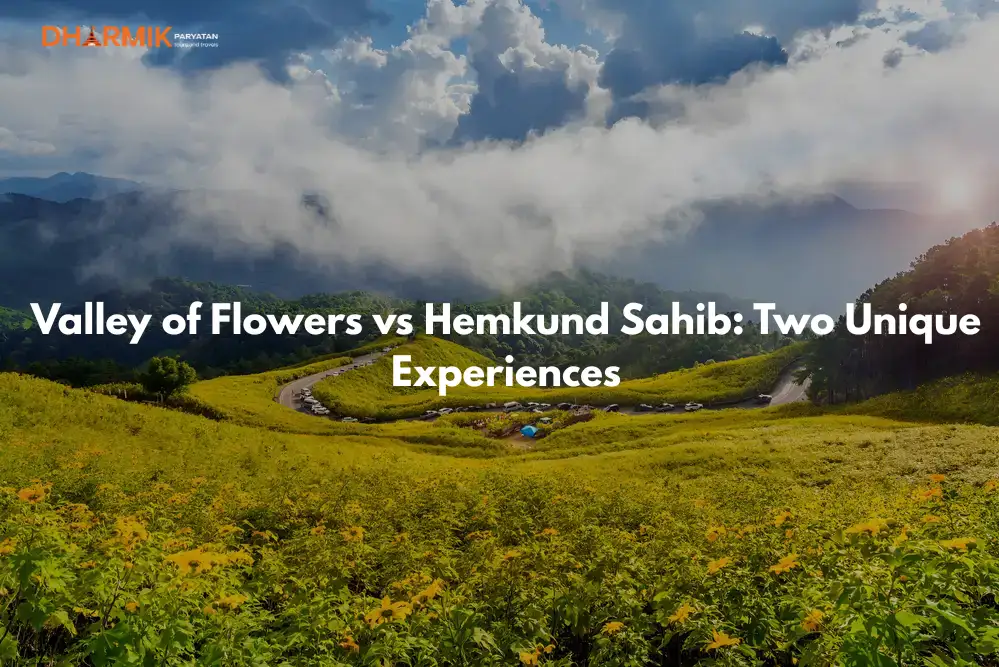
Chamoli district in Uttarakhand is famous for two prominent locations, the Valley of Flowers and Hemkund Sahib, distinctive in their own way. Both of the sites attract adventure enthusiasts, hikers, and spiritual pilgrims. While Hemkund Sahib is based on spiritual devotion, the Valley of Flowers showcases distinctive varieties of botanical wonders. This blog will give you a detailed overview of the features that make these locations exceptional.
Valley of Flowers: The Undisputed Garden of Wonders
1. Rich Biodiversity
Valley of Flowers National Park is a UNESCO World Heritage Site shielded with indigenous alpine flowers and a striking variety of flora. A wide variety of flowering species, like Brahma Kamal, Blue Himalayan Poppy, Cobra Lily, and Himalayan Bellflowers, are included in the 600-plus flowering plants, which makes the valley a colorful spectacle during the rainy season. The valley’s biosphere hosts a diverse range of wildlife, which includes the Himalayan black bear, blue sheep, elusive snow leopard, and various birds and butterflies.
2. Ecological Zones
The valley’s soil maintains a fertile environment for many species to flourish and thus helps to retain moisture even in dry summers. The park is classified based on three ecological zones:
- Sub-alpine (3,200–3,500m): Home to Himalayan maple, fir, birch, and rhododendron.
- Lower alpine (3,500–3,700m): Lower alpine (3,500–3,700m): Junipers, willows, potentilla, and geranium are abundant and support the most diverse range of alpine plants.
- Higher alpine (above 3,700m): Consists of rocky slopes, mosses, lichens, and other exquisite flowering herbs.
3. Trekker's Heaven
Govindghat is the starting point of the Valley of Flowers trek, with a breathtaking journey along the Pushpawati River. The 4 km moderate trek from Ghangaria to the valley is open to most trekkers, which is tempting for both beginners and seasoned hikers.
4. Solitude Seekers
The towering Himalayan peaks – Nar Parbat, Nilgiri Parbat, Gauri Parbat, Rataban, and Saptasring – provide an amphitheater-like experience. This is suitable for travelers who are looking for solace and inspiration.
5. Historical Importance
The Valley of Flowers obtained global recognition for its biodiversity after being discovered by British mountaineer Frank S. Smythe in 1931. In 2005, it was given a UNESCO designation, which rooted its significance. It’s a favorable destination for photographers and botanists to observe the beauty of nature at its finest.
Hemkund Sahib: The Gem of the Himalayas
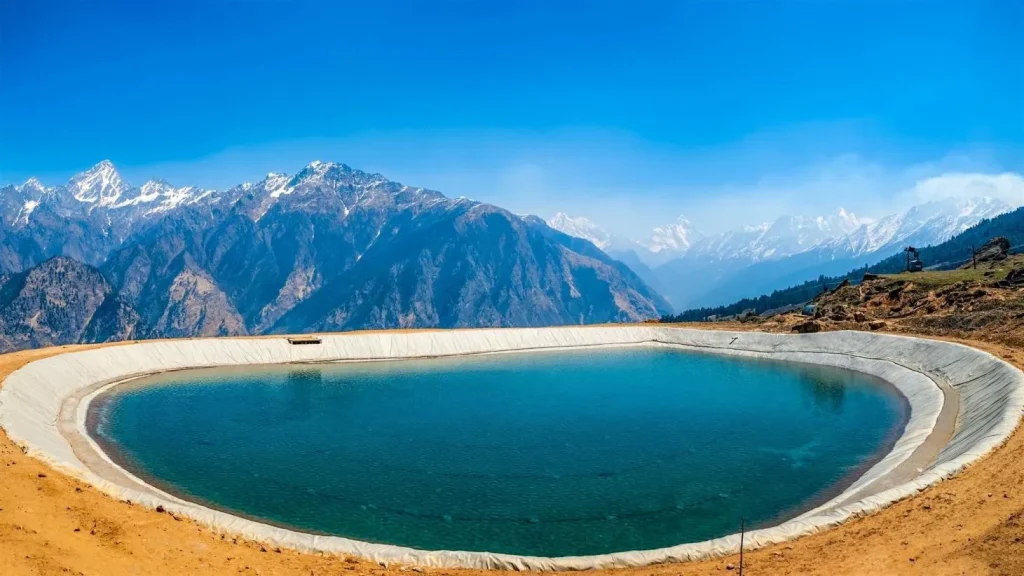
The highest Sikh Gurudwara in the world, Hemkund Sahib, is situated at a height of over 15000 feet (4329 meters). The location of the Gurudwara is near the Hemkund lake. This high-altitude pilgrimage site attracts thousands of devotees every year, looking for spiritual comfort.
1. Spiritual Pilgrimage and Trek
The trek to Hemkund Sahib requires a difficult 6 km ascent from Ghangaria, which is a more arduous journey than to the Valley of Flowers. The devotees chant “Waheguru” as they ascend with faith and persistence. The physical difficulty of the journey is equated to the act of devotion, which represents spiritual perseverance.
2. Temples and Legends
Guru Gobind Singh, the tenth Sikh Guru, is believed to have meditated at Hemkund Sahib in a previous life, according to Sikh tradition. In Hindu mythology, the site has spiritual significance as the Lokpal or Laxmana Temple nearby is considered the place where Laxmana, Lord Rama’s brother, meditated after the Lanka battle.
3. Presence of the Brahma Kamal
The state flower of Uttarakhand, Brahma Kamal, is present in abundance on the lake, adding to the natural beauty of the place. This enhances the mystical aura of the place. The glacial Hemkund lake is truly an unforgettable sight, especially when the still waters capture the reflection of the surrounding peaks.
Valley of Flowers vs Hemkund Sahib: An Overview
| FEATURE | Valley of Flowers | Hemkund Sahib |
| Key Highlight | Rich biodiversity, trekking, scenic atmosphere | Spiritual pilgrimage, Gurudwara setting |
| Flora & Fauna | 600+ species of flowers, rare wildlife | Brahma Kamal, alpine flora, scenic lake |
| Altitude | 3,352 – 3,658 meters | 4,329 meters (Gurudwara), 4,600 meters (lake) |
| Trek Difficulty | Moderate (4 km from Ghangaria) | Steep and challenging (6 km from Ghangaria) |
| Cultural Significance | UNESCO World Heritage, natural wonders | Sikh and Hindu pilgrimage, spiritual significance |
| Notable Features | Meadows, waterfalls, Pushpawati River, wildlife | Gurudwara, Hemkund Lake, Brahma Kamal, Laxmana Temple |
| Best Time to Visit | July–September (monsoon bloom) | June–September |
Unique Features
1. Valley of Flowers
- Unique Himalayan wildlife and wildflowers create a charming scenery.
- A perfect place for sightseeing, photography, and solitude.
- Ecologically significant and known globally for its scenic beauty.
2. Hemkund Sahib
- Relevant for Sikh and Hindu devotees from worldwide.
- Pilgrimage focused on spirituality and perseverance.
- The peaks and Hemkund lake create stunning visuals.
Conclusion
Both the Valley of Flowers and Hemkund Sahib provide different experiences yet enchanting. Each of these sites are the perfect getaway solution through the charming natural beauty and warm spiritual experience. Experiencing both of them will give you an insight into the true heart of Uttarakhand- nature and spirituality.
Contact an experienced travel agency like Dharmik Paryatan to customize your Valley of Flowers tour package and Hemkund Sahib tour package. Get ready for a journey filled with devotion and happiness!